Global Oil Crisis & Geopolitical Tensions: How Vietnam Bag Manufacturing is Engineering Supply Chain Resilience
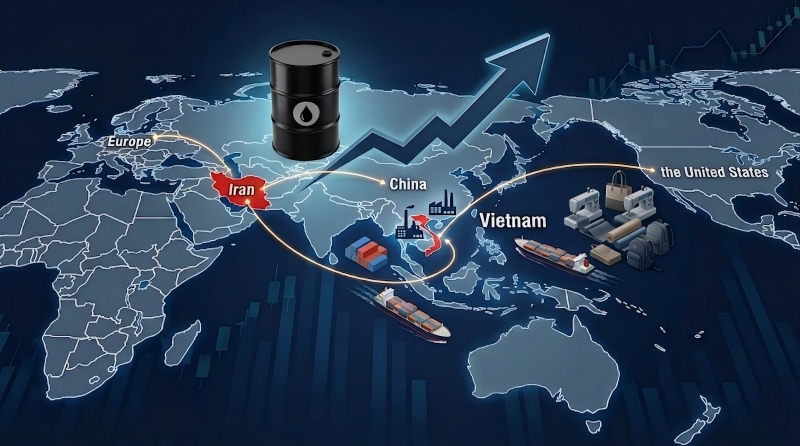
The recent Iran war and the global oil crisis are creating new uncertainty for global manufacturing and international trade. For importers, wholesalers, sourcing companies, and global brands, understanding how the oil crisis impacts Vietnam bag manufacturing has become increasingly important for maintaining margin health and inventory continuity.
Vietnam has firmly established itself as one of the world's most critical production hubs for backpacks, travel bags, laptop bags, cooler bags, and promotional bags. However, rising fuel prices, shipping instability, and compounding supply chain pressures are forcing every leading bag supplier Vietnam manufacturer to systematically rethink production planning, upstream material sourcing, and outbound logistics strategies.
Why the Oil Crisis Matters to Vietnam Bag Manufacturing
The global oil crisis directly affects every operational stage of Vietnam bag manufacturing. From primary fabric extrusion and foam lamination to inland transportation and ocean container shipping, fluctuating fuel costs are deeply intertwined with the final landed manufacturing costs.
The vast majority of raw materials utilized in modern technical bags—including polyester (70D, 210D, 420D, 600D, 1680D), nylon, PU backing coatings, and synthetic high-tensile webbing—are directly petroleum-based derivatives. When crude oil prices spike, upstream material refineries and texturizing mills increase their prices. This immediately creates intense cost pressures for every bag supplier Vietnam factory executing complex OEM and private label programs.
Simultaneously, the energy crisis exerts upward pressure on international freight rates. Ocean freight liners routinely implement Emergency Bunker Surcharges (EBS), while air freight capacities remain highly volatile due to changing geopolitical flight routing. Consequently, enterprise-level global buyers are shifting their focus away from margin-squeezing toward comprehensive supply chain stability.
How Vietnam Bag Manufacturing Is Engineering a Strategic Response
Despite these macro-environmental headwinds, Hecheng Vietnam bag manufacturing enterprises are demonstrating remarkable agility and resilience. Fujian hecheng bag factory retains strong structural competitive advantages compared to alternative global production regions:
| 1. Dense Localized Supply Ecosystems As a professional bag supplier in Vietnam hub, hecheng vietnam minimizes international transit exposure by coordinating material sourcing, precise sample development, printing, technical embroidery, and bulk assembly locally within integrated industrial zones. This dramatically eliminates unnecessary domestic and cross-border transport overhead. | |
| 2. Digital Layout & Waste Elimination Systems Hecheng vietnam factories are leveraging digitized CAD pattern nestings, automated CNC fabric cutting, and strict lean production flowlines. Optimizing fabric utilization yields reduces raw material waste, directly counteracting the inflated cost of petroleum-based textiles. | |
| 3. Multi-Tiered Raw Material Buffer Controls Instead of operating on a fragile Just-In-Time to place material orders, hecheng vietnam bags manufacturer are implementing proactive material forecasting and long-term yarn-booking systems to lock in baseline costs before energy market fluctuations impact fabric mills. |
Supply Chain Stability Is the Ultimate B2B Competitive Advantage
Historical market disruptions have taught enterprise global procurement teams that localized production savings can instantly be wiped out by stockouts, missed seasonal launch windows, or delayed container departures. Today, the confluence of geopolitical tensions and the energy crisis elevates supply chain stability from an operational metric to a core strategic differentiator.
Consequently, Hecheng Vietnam bag manufacturing facilities are fortifying our strategic alignment with major chemical, weaving, and hardware mills. As a truly dependable bag supplier Vietnam partner must prove our possess robust risk management infrastructures, financial liquidity to hold rolling inventories, and clear transparent digital communication protocols alongside raw sewing capacity.
Building Long-Term Sourcing Resilience
While macroeconomic ripples persist, Vietnam stands out as one of the most structurally sound, politically stable, and tariff-advantaged manufacturing destinations for bags and premium soft goods. Navigating these external shocks successfully successfully requires alignment with an expert bag supplier Vietnam partner who possesses sophisticated operational frameworks, modern quality management systems, and a commitment to transparent communication.
Protect Your Supply Chain Margins Against Market Fluctuations
Are you auditing your current manufacturing matrix for the upcoming quarters? Partner with an experienced, vertically integrated Vietnam manufacturing team to lock in material availability, protect delivery schedules, and optimize your overall landed costs.
Or contact our procurement experts directly via email at inquiry@hcbags.com to review your customized OEM/ODM project specifications.